Mumbai – Ahmedabad Bullet Train: Ghansoli Tunnel Breakthrough using new Austrian tunnel method


Mumbai-Ahmedabad Bullet Train Status: Railway Minister Ashwini Vaishnaw carried out a breakthrough explosion on Saturday Rs 108 crore Mumbai – The Ghansoli website of the Ahmedabad Bullet Train Project is located in Maharashtra. The Ghansoli website marks the project’s first undersea tunnel in Mumbai.
Work has been completed on a 5km extension of the secure tunnel built between Ghansoli and Shilphata.
The central government has committed to providing competitive fares for the project and maintaining the interests of ordinary people Consider.
Add Zee business as your preferred source
Mumbai-Ahmedabad tunnel (estimated to be completed in 2028) will provide safe transport during the period Rescue Operation Between two cities.
The bullet train will extend 21 kilometers through the seabed of Mumbai.
project The new Austrian tunnel method is under construction and will include 12 train stations along the corridor.
The project will be the only underground station with the Bandra Kurla complex (BKC) in Mumbai.
Also Read: Mumbai-Ahmedabad Bullet Train BKC Station Works Fast Moving, It is expected to be operational in 2028
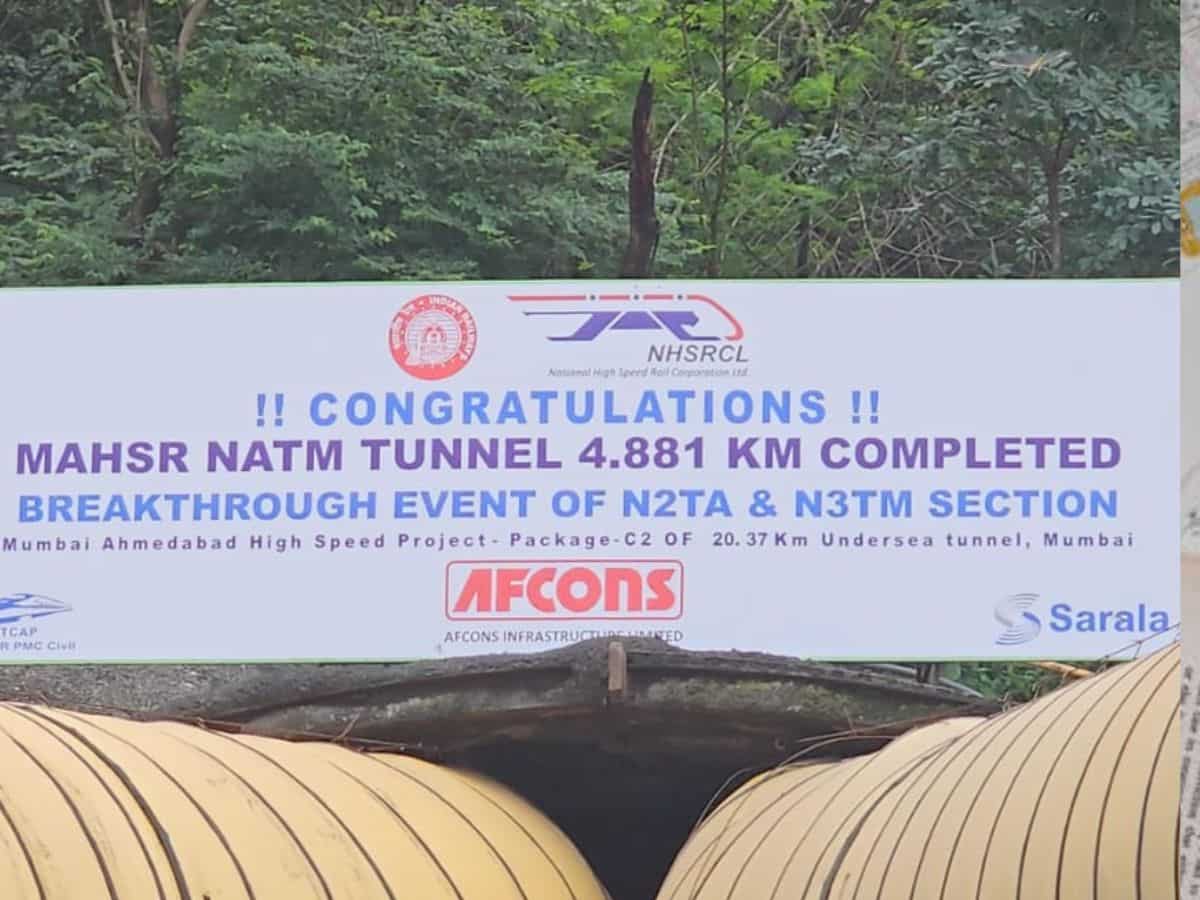
A breakthrough in the Ghansoli location was achieved using a new Austrian tunneling method.
New Austrian Tunneling Method (NATM): How does it work and what makes it better than traditional tunneling techniques?
This approach was developed around the mid-20th century in Austria and is a modern method of building tunnels that utilizes the natural strength of surrounding rocks to keep the tunnel stable while drilling. This is in particular contrary to conventional methods of using artificial structures to ensure stability.
In the new Austrian approach, tunnels are excavated in small steps by quickly adding support using special spray concrete and other materials. In this way, the soil or rock itself becomes part of the tunnel support system. Many experts find this method more effective because it reduces the need for thick lining and heavy steel and is especially useful in difficult geological sites.
The new Austrian approach is one of the most widely used tunneling technologies in the world, especially its flexibility and economicality.


