In African politics, the rampant carts of witchcraft has bothered some and others

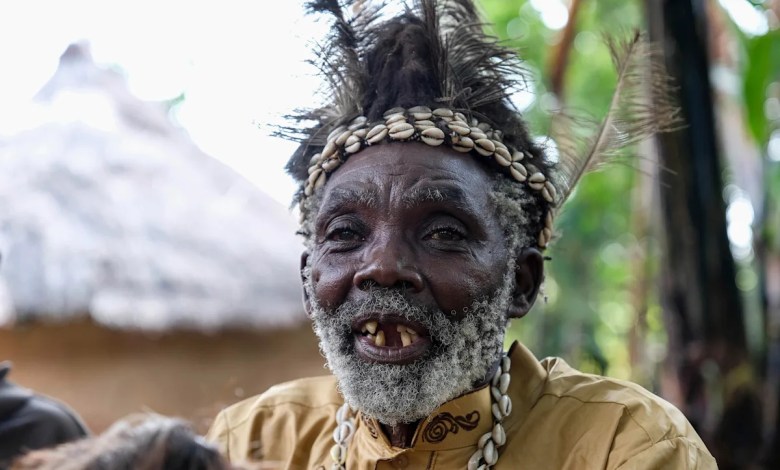
MBALE, Uganda (AP) – Wilson Watira reached out to help when she met a political opponent at the funeral and gestured for proper handshake. The man did not want to touch it, but folded a piece of paper he targeted Watla.
“He looked at me and picked the paper for the program. He folded it up and greeted me.” “He was just afraid of me because I wasn’t afraid of him.”
Watira, who sits in Uganda’s parliament, remembers the recent events as a vivid example of the rampant fear of witchcraft as politicians seek offices to try to surpass each other in the East African country.
In public, political competitions often require glasses, and competitors rent cars on the street for a noisy parade, providing voters with cash and other incentives. Behind the scenes, the struggle for victory can be spiritual, ranging from ritual sacrifice to visits with traditional therapists, according to Watira and others who spoke with the Associated Press.
Watira, the leader of a group that unites the Bamasaba people in Uganda, said incumbent lawmakers who refuse to shake hands may be worried about giving Watira somehow or provoking it. Watla said he was not surprised by the man’s behavior.
“When your mind is pushed to this level, you will always be suspicious,” he said of overcoming his fear of witchcraft. “You will start to imagine that this is the biggest challenge in our society.”
The spiritual warfare among politicians is part of a broader struggle over Uganda’s beliefs, which is Christianity as the main religion. Many people who attend the church regularly also secretly visit traditional shrines to provide mysterious services that they think can lead them to victory.
This fusionism has long plagued church leaders who taught that Christianity is incompatible with any remains of traditional religions that are still widely practiced in sub-Saharan Africa.
In African politics, often marked by the pain of class and racial boundaries, fear of witchcraft proves explosive.
In South Sudan, Vice President Riek Machar considered himself a left-handed man who was opened by the teeth of a tribal prophet a century ago and was the unified leader of his country. It is widely believed that superstition seeks power in South Sudan for Machar, who has been undermined in the war since his independence in 2011.
In Kenya, some anti-government protesters gathered in the capital last month said the disorientation they felt as they approached the president’s residence could be the evil spell of President William Ruto. He also faces criticism for building churches within the state assembly compound, which some critics see as ominous shrines.
In Zambia, two men were tried for allegedly engaged in witchcraft and aimed at hurting President Hakainde Hichilema. Hichilema himself, once accused of practicing witchcraft by his predecessor, Michael Sata, believes that the charm of his homeland is even stronger.
In Uganda’s capital, Kampala and other cities, notifications of some street poles are promised to magically catch thieves or restore lost lovers to people who are notified. Now, many are still promoting power to ensure politicians win the January 2026 election.
“In all Ugandan communities, the crazy dependence on witch doctors, politicians is crazy dependant,” said Steven Masiga, a researcher and cultural leader in Mbar. “The Witch Doctor is now collecting money from politicians. Now, when politicians mobilize money, there is a percentage of witch doctors because the real hope is the Witch Doctor.”
Many candidates, he said, think “votes can oscillate, but the witch doctor will never let you down.”
Masiga cites a politician in his area, and a witch doctor urged to peel a goat without slaughtering animals a few years ago. The Witch Doctor’s client won the election.
Uganda President Yoweri Museveni, who has been in power for forty years and is a candidate for re-election, has previously expressed his respect for African witch doctors, a often derogatory term for medical men and women who prescribe herbs for the disease and others claiming magic erasure problems. Some of these practitioners would rather be described as traditional therapists.
In a speech last year, Museveni recalled three chicken slaughterings he had as leader of the Bush War leaped onto a slaughtered chicken, a ceremony that promoted his power in 1986. Museveni said of traditional religion that “it is very powerful” and urged mainstream religious leaders not to confront practitioners.
“We have a great relationship with them,” he said of traditional therapists.
Many Ugandan politicians are believed to have retained the services of witch doctors, but they rarely admit in public that they avoid ridicule. Over the years, some state leaders have been seen entering the shrine of the witch doctors, attracting criticism from church leaders who condemn such behavior.
In 2016, Parliament Speaker Rebecca Kadaga photographed the shrine associated with her clan in eastern Uganda. The Anglican Archbishop issued a condemnation. Kadaga, who has since left the speaker, said she tried to inform her ancestors of political success.
She told reporters: “Who has no origin? Who has no where they come from? That’s my roots.”
In Mbale, the boy’s ritualized circumcision highlights a common belief in ancient customs, and traditional therapist Rose Mukite said she received political clients from faraway areas.
In her shrine, her small doorway forces clients to kneel or crouch, she shows off her practice on the floor by shaking the murals and throwing milk shells. Tobacco tubes are another tool for her trade. She blew smoke while spreading the future.
Mukite’s career began in 1980 because she was possessed by a spirit, and she said she had to overcome herself to gain the spiritual authority she now advocated. She provides services at a small fee.
“I have a lot of[customers],” she said.
She said she helped some politicians chew by managing the bark, thus lifting them out of disasters like incarceration. She said she would still not go to work after many years if her practice didn’t help.
Sometimes it’s too late – politicians are doomed to fail, she said.
“I can’t say I’ve been successful in everything,” she said. “It’s like being in a hospital when I die.”
Peace Khalayi, a Catholic, representing the parliamentary woman in her area, avoided the advice of supporters who wanted her to perform the ceremony, who thought it would help her win.
She ran for Muslims and Seventh-day Adventist Church and considered paying homage to rural elders. However, in the practice of traditional religion, classic behaviors, such as the requirement to sacrifice livestock, were unacceptable to her.
She recalls people urging her to consult a witch doctor.
“You tell them, ‘We’ll go.’ You pretend you’ve accepted it.
Still, Harayi said she sometimes fears how her opponent will hurt her if she is not fully protected.
“There must be fear. That’s not a lie,” she said. “When you have an opponent, you may want to be open to them, but you’re just in us that you can’t interact with your opponent publicly.”
___
The Associated Press’s religious coverage is supported through the Associated Press’s conversation with us and has been funded by Eli Lilly Endowment Inc. The Associated Press is fully responsible for this content.