NewYou can listen to Fox News articles now!
Jeff Bezos and fiancé Lauren Sánchez reportedly decided to change a wedding venue in Venice due to security concerns and possible protests.
The couple had planned to hold a wedding party at the historic Sciuola Grande della Misericordia in the Cannaregio section of the city, but are now moving it to the harder-to-reach Arsenale, a former shipyard, which is completely surrounded by water and only reachable by boat when connecting bridges are raised, BBC News and Reuters reported.
In recent days, protests have increased in the city, with protests about celebrity guests covering Venice with private jets and yachts. Other protesters also disagree with the politics of Amazon founder.
Many celebrities have been invited to wedding celebrations, which remain a secret, but are expected to begin on Thursday and Saturday in the picturesque Italian city.
Jeff Bezos, Lauren Sánchez
Jeff Bezos and fiancé Lauren Sánchez reportedly decided to change a wedding venue in Venice due to security concerns and possible protests. (Getty image of Cindy ORD/MG24/Metropolitan Museum/Vogue)
Ivanka Trump and Jared Kushner arrived in Italy ahead of the celebrations on Tuesday.
The couple took a boat to the St. Regis from Marco Marco Airport in Venice. Trump wore a matching long dress and an off-white top. The outfit has red and orange details.
Kushner kept it casual with linen buttons and khaki pants. Former administration adviser to Donald Trump, former administration father-in-law, paired with sunglasses and New York Yankees.
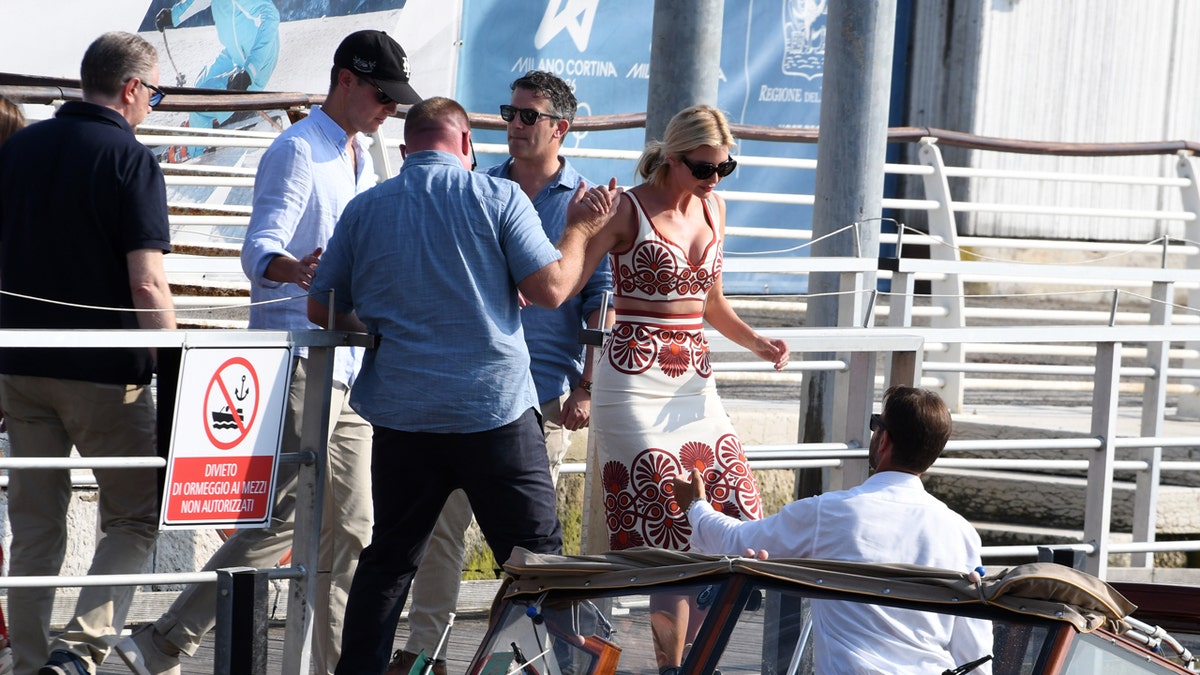
Jared Kushner and his wife Ivanka Trump arrived at Marco Polo Airport on June 24, 2025 at Jeff Bezos and Lauren Sanchez in Venice, Italy. (Luigi Iorio/GC image)
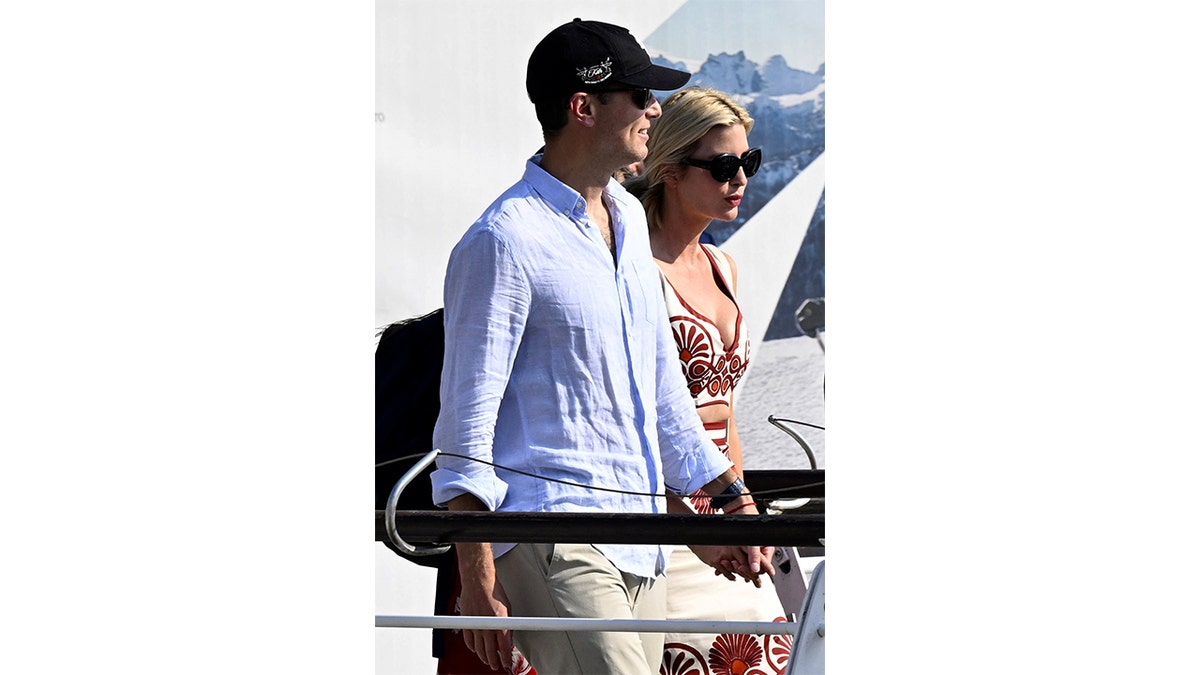
Ivanka Trump and her husband Jared Kushner (L) were taxied after arriving at Marco Polo Airport in Venice on June 24, 2025. (Andrea Pattaro/AFP via Getty Images)
Philanthropist and fashion designer Diane Von Fürstenberg also arrived in Italy on Tuesday.
When Belgian fashion designer arrived at the Marco Polo airport in Venice, he was wearing a colorful striped suit with a black top underneath.
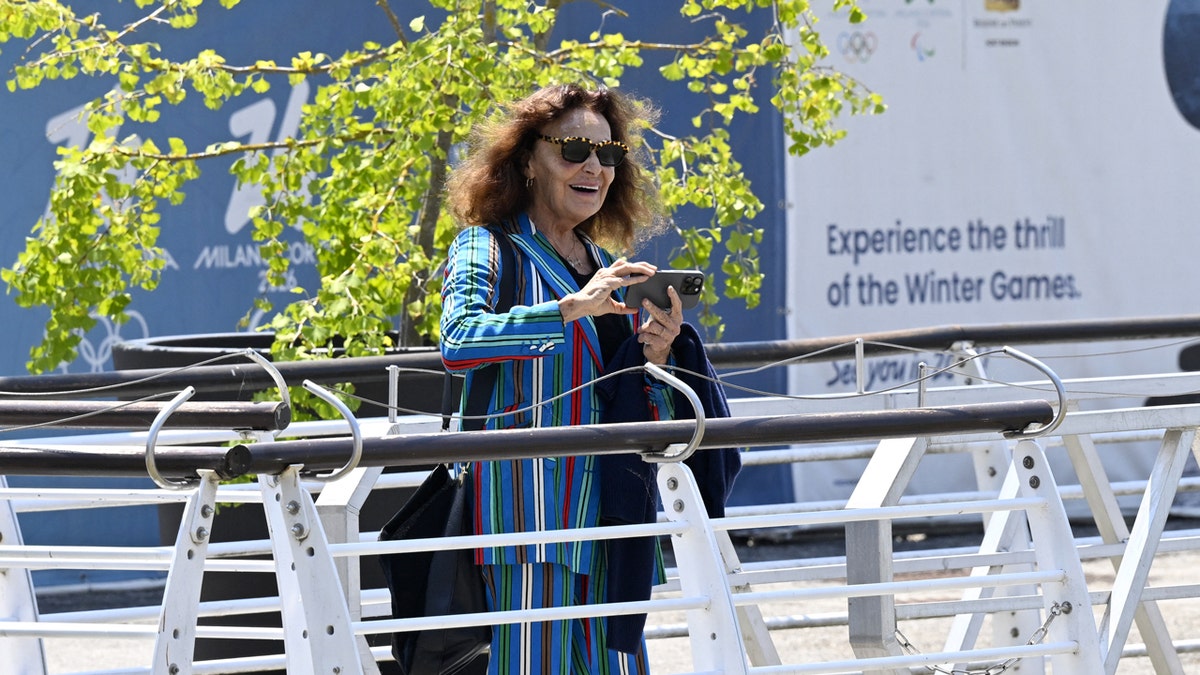
Fashion designer Diane Von Fürstenberg arrived at the Marco Polo Airport in Venice on June 24, 2026. (Andrea Pattaro/AFP via Getty Images)
Bezos and Sánchez made their debut in 2019 after Sánchez separated from Hollywood Agent Patrick Whitesell, divorced his ex-wife, Mackenzie Scott.
Like what you are reading? Click here for more entertainment news
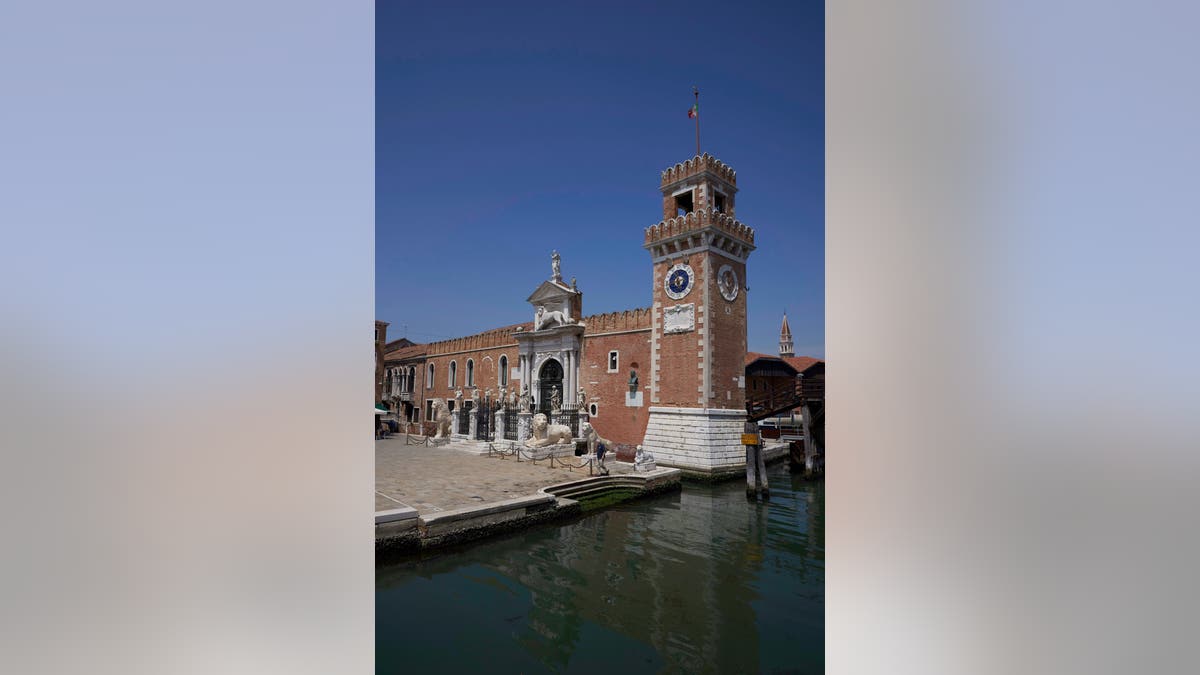
The main entrance to Venice Arsenai. (Paolo Reda/Universal Image Group via Getty Images)
The couple’s engagement sex was announced in May 2023. Bezos recommends using a 30-carat pink diamond ring that is estimated to be worth between $3 million and $5 million.
There are estimated 200 to 250 guests, including many rumored celebrities such as Kim Kardashian, Katy Perry and Leonardo DiCaprio.
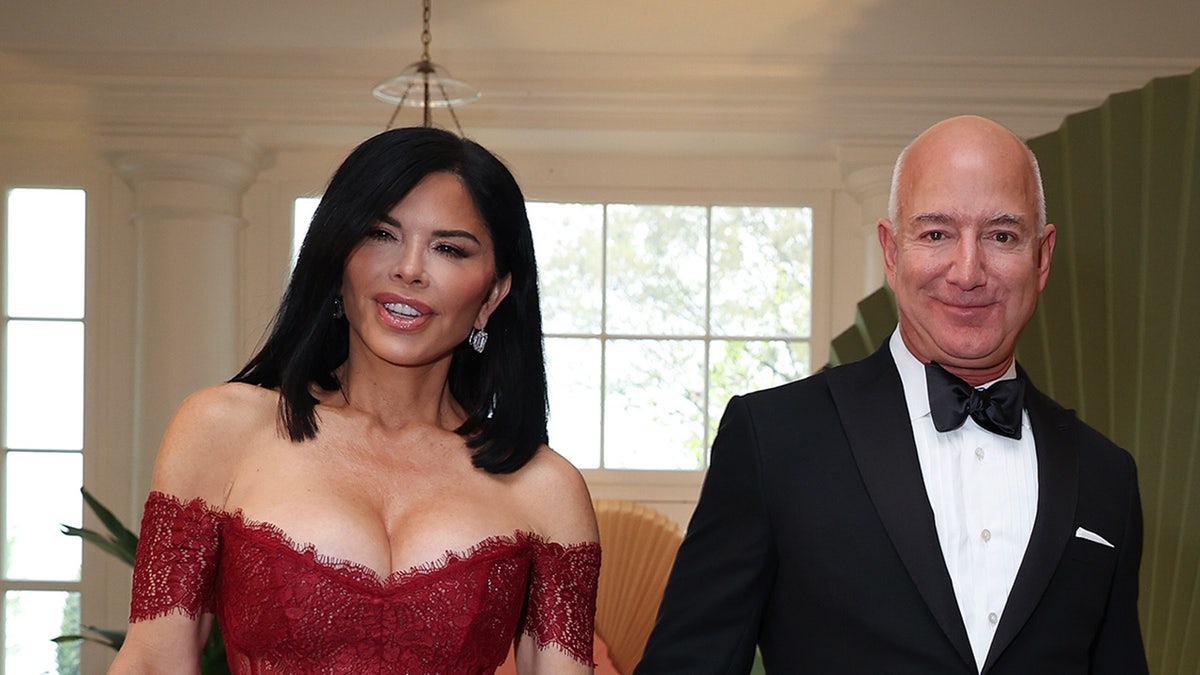
The couple’s engagement was announced in May 2023. (tasos katopodis/getty image)
The group leading the protests, “No Space for Bezos,” plans to hold more demonstrations in the city on Saturday.
The group also received praise for forced wedding venue moves.
“The news that Bezos escaped from Misericordia is a huge victory for us,” Tommaso Cacciari, leader of the Bezos movement, told Reuters.
Jeff Bezos, Lauren Sanchez get married during the three-day Venice event
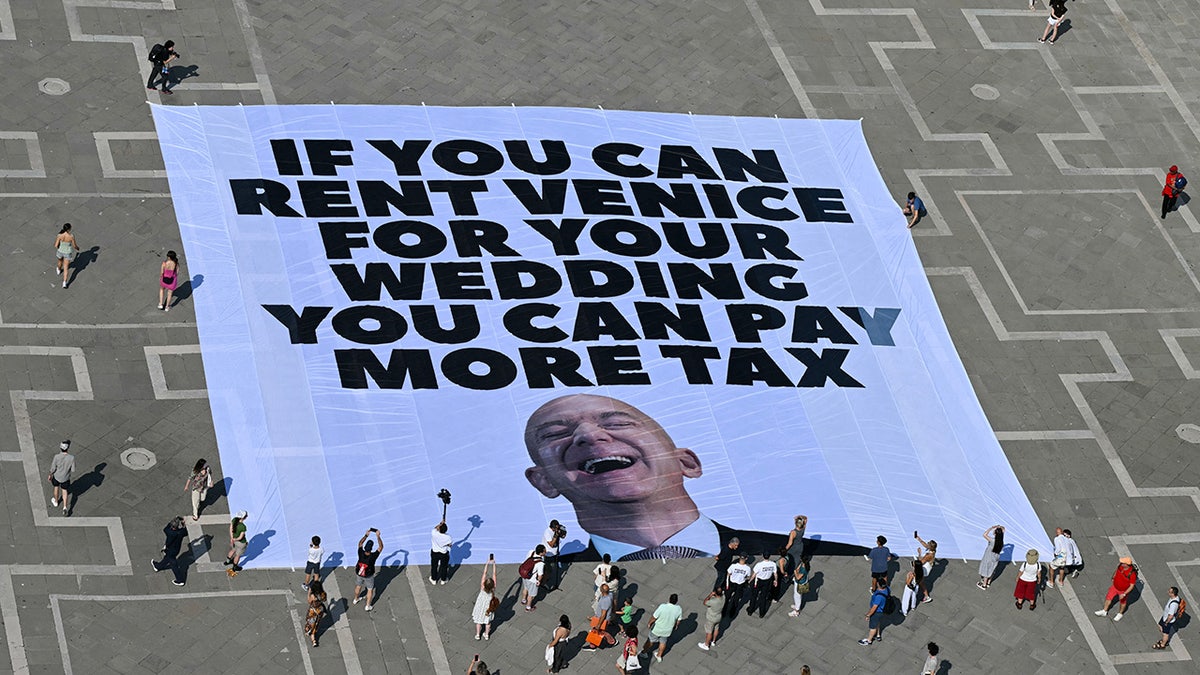
Activists at the International Environment Group Greenpeace Group deployed a huge banner showing photos of Jeff Bezos and read “If you can rent out Venice for your wedding, you can pay more taxes” on June 23, 2025 in St Mark Square in Venice. (Stefano Relllandini/AFP via Getty Images)
The protests have been criticized by the president of the Venice region, including Venice, Luca Zaia, who said the wedding celebrations could bring tens of millions of dollars in much-needed income to the city.
According to Good Morning America, the couple asked guests to donate to three Venetian charities at their wedding invitations in lieu of gifts. Charities include the UNESCO Office of Venice to “maintain the irreplaceable cultural heritage of the city”, “Corila” to restore the protection of the future of Venice and the vital lagoon habitat of the International University of Venice to support the research and education of sustainable solutions. ”
The couple also postponed the idea that their wedding would cover the city, which is already packed with tourism.
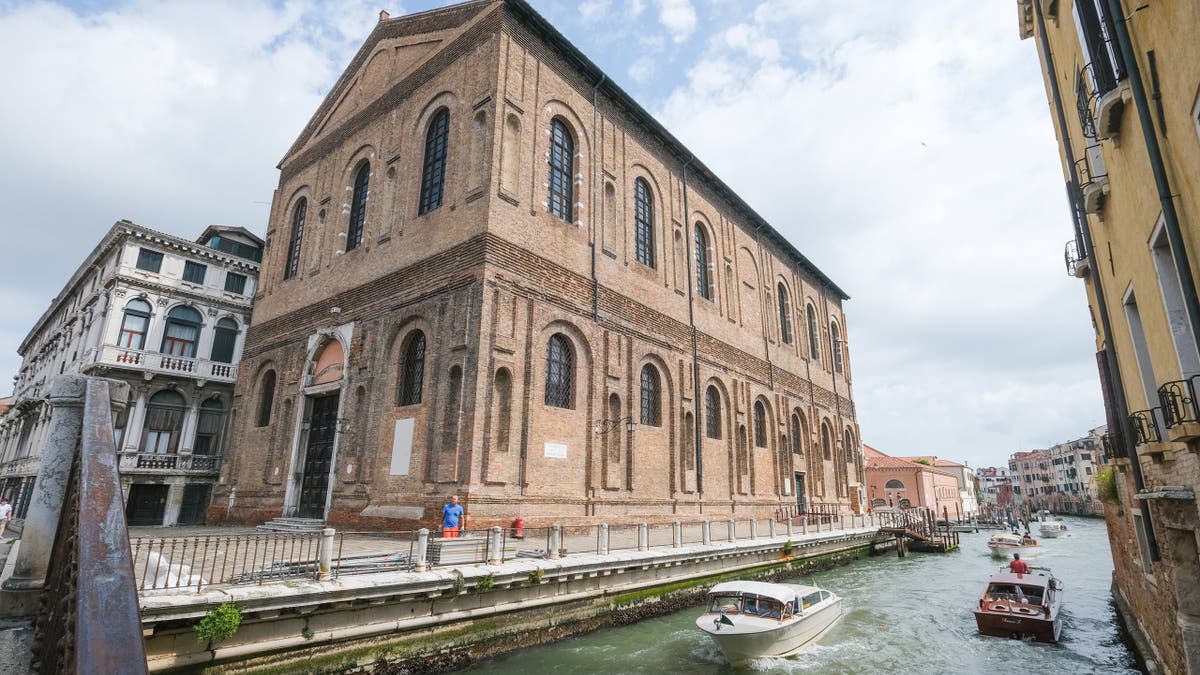
General vision of Scuola Grande Della Misericordia in Venice, Italy on June 4, 2025. (Stefano Mazzola/Getty Images)
Click here to register for entertainment newsletter
The couple’s wedding planner told Fox News Digital that Bezos and Sánchez specifically directed them to minimize disruption with respect to locals.
“As event organizers who have worked in Venice for more than 24 years, we feel obliged to create a record in the misinformation, untrue and misunderstanding that circulated at Bezos’ weddings, and therefore have to set records,” Lanza & Baucina Limited’s team said in a statement. “From the beginning, the instructions of our clients and our own guiding principles were very clear: minimized interference with the city, respect for its residents and institutions, and overwhelming work by locals at the event.
The statement continued: “‘take over’ the city’s rumors are totally wrong and totally opposed to our goals and reality.” “The exaggerated water taxis or gondola has never been booked, and the number of taxis retained is commensurate with the number of guests. We have been working to have minimal negative impact or damage to the lives of Venetians and city tourists until the recent news of protests.
Click here to get the Fox News app
“We have always recognized the broader debate and key issues surrounding the city’s future and from the outset our clients have been honored to support the city and its most important lagoon through nonprofits and related projects,” the statement concluded.