Trump wants to take over some American cities. It’s unlikely – but he can bring them a difficult life


US President Donald Trump
Trump has been spurred by efforts to suppress immigration and its characteristic high crime rates in recent weeks in an ongoing dispute with several major U.S. cities.
“We are thinking about doing this,” he said a few weeks ago about Washington, D.C.
His threat also extended to New York City, especially in reference to Mayor Zohran Mamdani, a self-proclaimed socialist and rising star in the Democratic Party, who Trump said would be a disaster if he was elected mayor in the country’s largest metropolis.
“We’re going to straighten New York. … Maybe we’re going to have to straighten it out of Washington,” the president said earlier this month.
Is he capable of doing this? According to experts who spoke with CBC News, it does depend on what Trump is referring to and where it is. But he can find ways to make it very difficult for city governments and their residents.
U.S. President Donald Trump directed federal immigration officials on Sunday to prioritize the deportation of undocumented immigrants in Democratic cities. This is after a massive protest over the weekend, opposing the Trump administration’s immigration policy in major cities across the country.
What are the limitations of his power?
David Schleicher, an expert at Yale University and City Government, said the Supreme Court was “very clear” that the federal government could not command parts of the state.
“That is, they can’t tell state officials or local officials how to run the government, so they can’t take over them and let them do something,” he explained.
This is outlined in the Tenth Amendment to the U.S. Constitution, which will be delegated to states that have not been allocated to the federal government. In the amendment, the federal government is prohibited from directing state or city officials to work towards their goals.
“If what [Trump] The means are like, moving the mayor away and replacing him with Rudy Giuliani or something – it’s not something he’s authoritative. ” Schleihill said.
But when Trump refers to “a place to operate” when “we have great power” in the White House to “we have to” (as he did earlier this month, answering questions about Mamdani’s rise as a mayoral candidate, he might refer to some different outcomes.
Philip Wallach, a senior fellow at the American College of Enterprise, a conservative think tank in Washington, D.C., said there are several ways the federal government can “engage” with cities.
This could include sending immigration officials or federal law enforcement to cities, unlike anything Trump did in an Immigration and Customs Enforcement (ICE) attack in Los Angeles earlier this summer, or sending the National Guard in a protest attack.

U.S. President Donald Trump deployed the National Guard to respond to immigration protests in California when the administration believed the rebellion was in progress and few people used the law. Andrew Chang broke how Trump used these protests as an emergency and everything from trade deficits to fentanyl, part of the administration of executive orders with uncontrolled power.
He can also threaten fiscal consequences with his authority or the help of Congress, which he has done to Chicago many times.
New York City, in particular, relied on the federal government with $7.4 billion in fiscal year 2026.
Wallach compared this dynamic with the ongoing conflict between the Trump administration and major U.S. universities, including New York’s own Columbia University. Although the federal government does not control Colombia, it has used cuts to use federal funds as leverage for schools.
“I hope the same script works for New York City, but it’s bigger,” Wallach said.
DCs are more susceptible to federal intervention
Trump also muses on taking over Washington, D.C., claiming the area is full of crime. Data show that violence has dropped significantly in 2024.
But presidential power is another story in the U.S. capital. The District of Columbia is a federal district, not a state, and is more susceptible to federal government and Congress intervention.
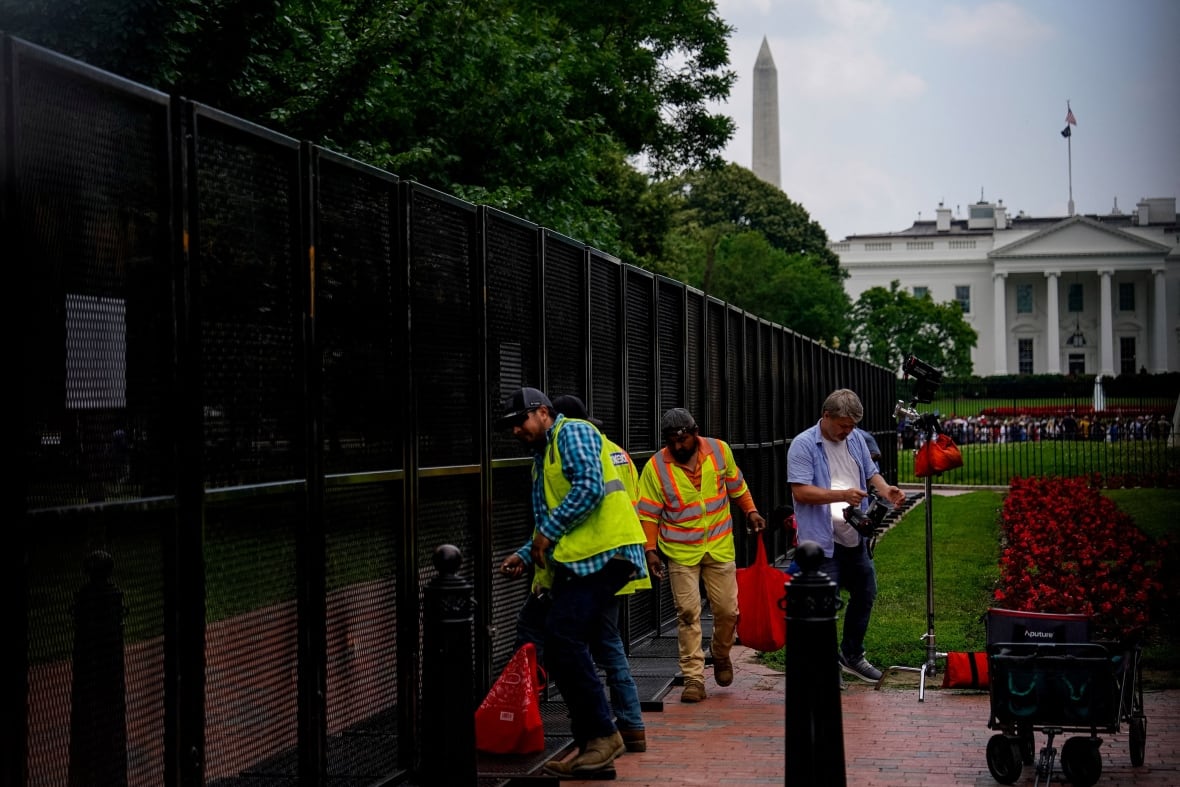
DC is managed under the National Rule Act, a form of autonomy that became law in 1973. However, Congress reviewed all legislation passed by local councils and had the power to the budget of the region – its residents had no voting representatives in Congress. The president also appointed judges in the district.
“They don’t have the rights in New York City that we don’t have in DC, so we’re in a more volatile position,” said Vanessa Batts-Thompson, executive director of the Center for Law and Justice at DC Appleseed.
Washington, D.C. has had many different government structures over the years, but she said: “Frankly, the federal administration has not worked well in the past,” partly because it was difficult to balance federal power with local input.
Although Trump has advocated the federal government’s acquisition of DC to combat chaos, defeating Thompson noted that federal law enforcement has already occupied a significant role in the city, from the FBI to the Capitol Police to the Park Police, in addition to local police in Washington, D.C.
A full acquisition of the region could mean eliminating the National Rule Act, she said.
But there are other options, such as having Congress legislate heavily, or recruiting “Control Committee” – A strategy from the 1990s, the federal government appointed a team of officials to sit above the mayor of DC to act as a backup for spending and policy decisions.
But, “I don’t think there is a need to re-impose the control committee anymore,” Butters Thompson said, partly because DC’s finances are now being overseen as “a type of single-person control committee chief financial officer.”
The political interests of Trump’s urban disputes
Trump said when Trump positioned himself as a strong opposition to democratic cities, several experts he spoke with CBC News said a recent example was his public tête-à-tête California Gov. Gavin Newsom joined Gavin Newsom during protests against immigration attacks in Los Angeles.
“Trump is considering other cities where politicians or overall populations are opposed to his vision as president,” said Domingo Morel, associate professor of political science and public services at NYU.
He likens it to the friction between Republican state government and democratic cities in the 1980s and 1990s: “I think Donald Trump is taking that script… Now say we’re going to do that at the federal level.”
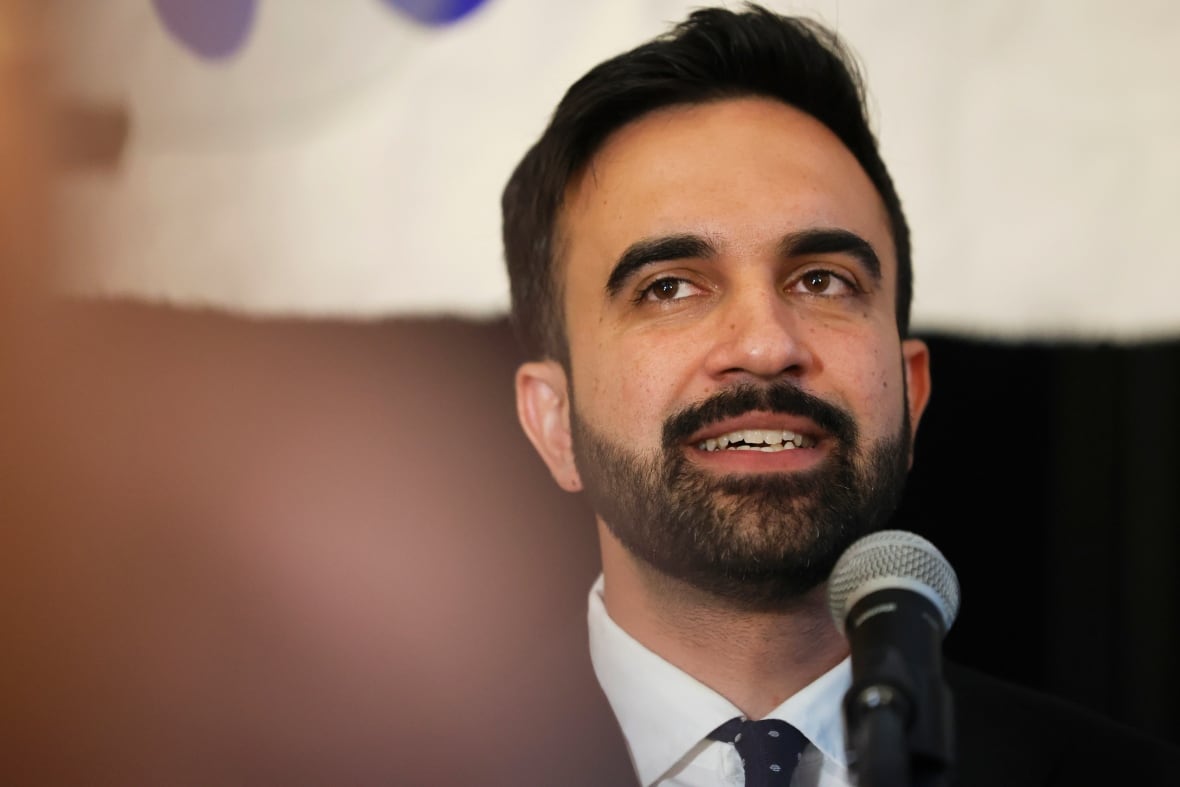
Schleicher, a law professor at Yale University, said Trump and Mamdani had a convenient relationship with both of them.
“I think Trump’s political team thinks Mamdani is a gift for them because they’re against the kind of person they want to oppose,” Schleihill said.
Meanwhile, Mamdani can use Trump’s general unpopularity among New Yorkers to play to his strengths “because comparing other numbers to Trump is a political interest in him,” Schleihill added.
“It’s the kind of politics I imagined, because it benefits them both.”